
What Do Digital Marketing Services Include?
Digital marketing services help businesses attract potential customers, generate leads, increase sales and build a stronger online presence. They typically include search engine optimisation (SEO), Google Ads, social media advertising, content marketing, analytics, conversion tracking and marketing automation. The right combination depends on your business goals, target audience, budget and how customers make purchasing decisions.
For small businesses and healthcare professionals, the goal is not to use every available marketing channel. It is to invest in the services that reach the right people and turn their interest into measurable business results.
What Are the Core Components of a Digital Marketing Strategy?
Digital marketing services cover the strategies, tools and activities businesses use to reach customers online. While some services focus on visibility, others generate immediate enquiries, nurture potential customers or measure performance.
Here are the main services businesses can use:
1. Search engine optimisation (SEO)
SEO helps your website appear in organic search results when people look for your products, services or expertise. It includes keyword research, on-page optimisation, technical SEO, content development and improving the overall website experience.
For example, a healthcare practice could use SEO to attract people searching for a particular treatment, while a small business could target searches related to its services.
SEO is generally a long-term investment. Results take time, but strong organic visibility can generate relevant traffic without paying for every click.
2. Google Ads and pay-per-click advertising
Google Ads allows businesses to reach people actively searching for specific products or services. Search campaigns can be particularly useful when potential customers already know what they need.
A service business, for instance, can target high-intent searches and direct users to a relevant landing page. Unlike SEO, paid search can generate visibility soon after a campaign launches, although performance depends on competition, budget, targeting and the quality of the offer.
3. Social media marketing and Facebook Ads
Social media marketing helps businesses build awareness, engage their audience and distribute useful content. Paid advertising on platforms such as Facebook and Instagram can also introduce services to people who may not be actively searching for them.
These campaigns are useful for generating demand, promoting offers, remarketing to website visitors and reaching carefully selected audiences.
4. Content marketing
Content marketing involves creating helpful material such as blog posts, service pages, guides and educational resources. It supports SEO, answers customer questions and helps establish credibility before a prospect makes contact.
For healthcare professionals, informative content can explain treatments, address common concerns and help prospective patients make informed decisions.
5. Landing page optimisation and conversion rate optimisation
Getting visitors to your website is only part of the job. Landing page and conversion rate optimisation focus on turning those visitors into enquiries, bookings or sales.
This may involve improving page messaging, simplifying forms, strengthening calls to action and making the website easier to use on mobile devices.
6. Email marketing and marketing automation
Email marketing helps businesses follow up with prospects, nurture leads and maintain relationships with existing customers. Automation can trigger relevant communications based on actions such as submitting a form, booking an appointment or downloading a guide.
The aim is to make follow-up more consistent without requiring every interaction to be managed manually.
How SEO, Google Ads and Facebook Ads serve different purposes?
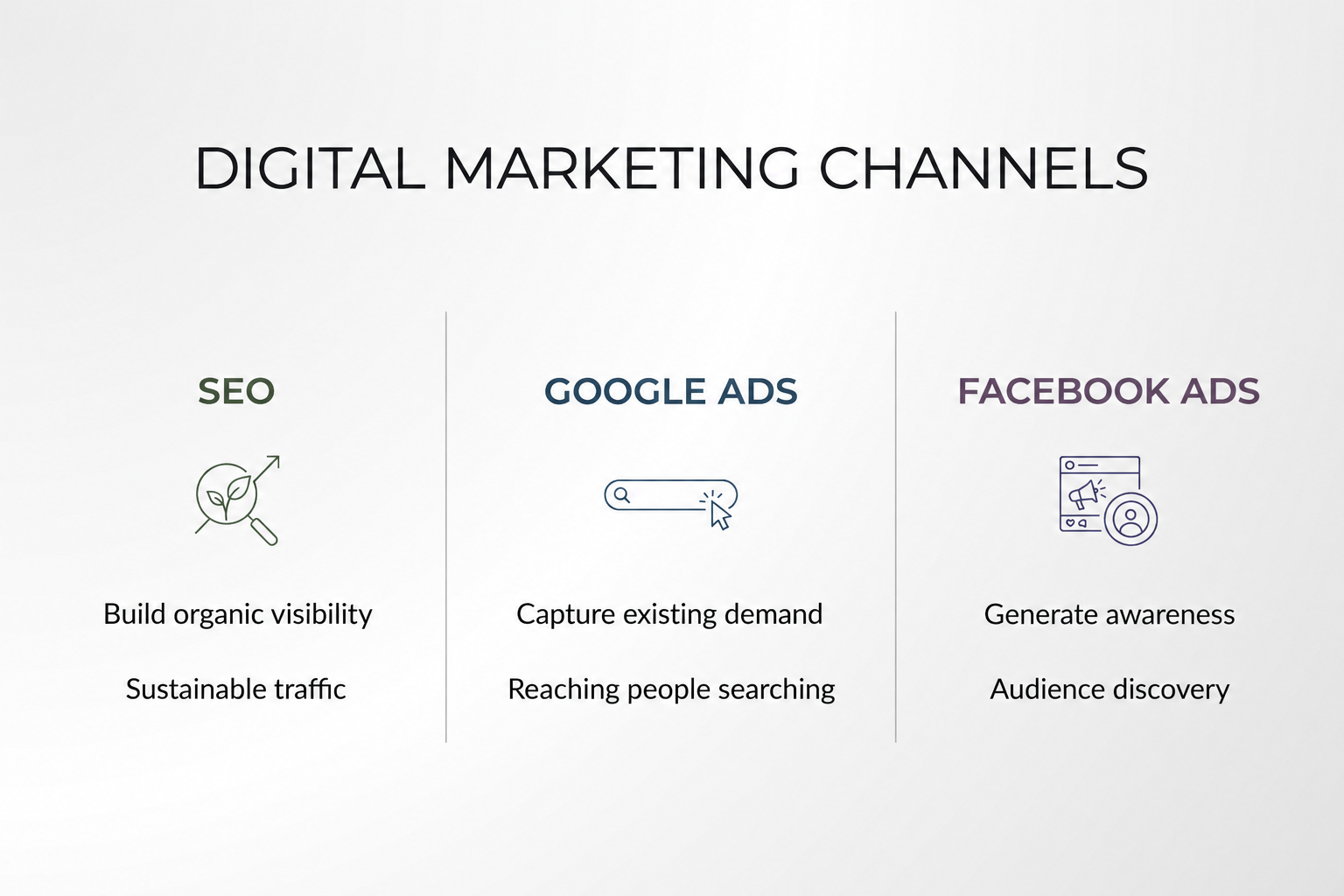
These three services can work together, but they address different stages of the customer journey.
Consider a healthcare practice looking to attract more suitable patient enquiries. SEO can help its treatment pages appear in relevant searches. Google Ads can reach people looking for those treatments now. Social media advertising can introduce the practice to potential patients and reconnect with people who previously visited its website, where tracking and consent requirements permit.
Using all three is not always necessary. If your budget is limited, it may be more effective to start with one primary channel, measure the results and expand once you understand what works.
The role of analytics, conversion tracking and marketing automation
Conversion tracking is particularly important. Depending on your business, meaningful conversions might include completed enquiry forms, appointment bookings, qualified leads or purchases.
However, not every conversion has equal value. Ten enquiries that never respond may be less valuable than three qualified prospects who become customers. Where possible, connect marketing data with lead quality, sales outcomes and revenue.
Marketing automation complements this process by helping you respond to enquiries, organise leads and maintain consistent follow-up. Together, analytics, tracking and automation help you make decisions based on evidence rather than assumptions.
Which services does a small business actually need?
The best starting point depends on your current situation rather than the number of services available.
- If you need leads quickly: Consider Google Ads, supported by a focused landing page and accurate conversion tracking.
- If you want long-term organic growth: Prioritise SEO, useful content and improvements to your website.
- If your audience needs to discover your business first: Consider Facebook and Instagram Ads alongside relevant social media content.
- If you receive enquiries but struggle to convert them: Review your landing pages, lead quality, response process and conversion tracking.
- If leads are being lost through inconsistent follow-up: Consider email marketing and suitable automation.
Healthcare professionals may also need to account for advertising platform policies, patient privacy, consent and restrictions on healthcare-related claims. Marketing activity should reflect the rules that apply to the relevant platform and location.
Start with the biggest bottleneck in your customer journey. Adding more channels will not solve a website that fails to convert or a lead management process that leaves prospects waiting.
How to choose the right combination for your goals?
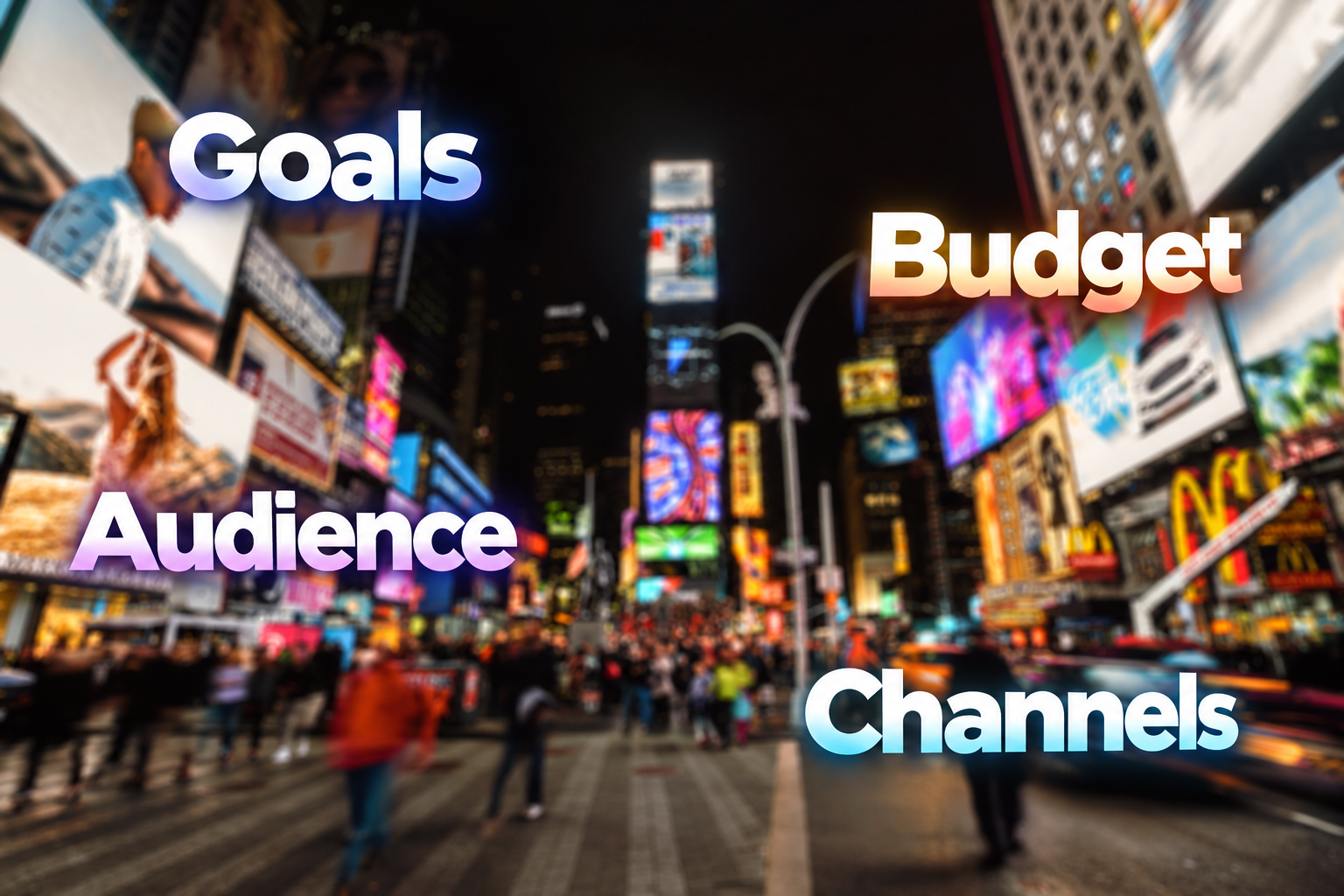
Before investing in digital marketing services, clarify what success means for your business. Is the priority more qualified enquiries, booked consultations, online sales, stronger organic visibility or a lower customer acquisition cost?
Next, consider these five factors:
1. Your audience: Understand what potential customers search for, which platforms they use and what information they need before making a decision.
2. Your budget: Allocate enough to implement and measure your chosen strategy. Spreading a small budget across too many channels can limit the data you collect and the results you achieve.
3. Your website: Check whether your website communicates your value clearly, works well on mobile devices and makes the next step obvious.
4. Your measurement setup: Define meaningful conversions before launching campaigns so you can assess performance accurately.
5. Your review process: Evaluate lead quality, conversion rates and cost per qualified enquiry regularly. Adjust the strategy based on actual performance rather than relying solely on clicks, impressions or traffic.
Working with a digital marketing consultant can be a practical alternative to hiring an agency, particularly for small businesses that need focused expertise and direct communication. A consultant can help prioritise services, develop a tailored strategy and concentrate spending on the activities most relevant to your goals.
Need help choosing the right digital marketing services?
At Niks Digital, I help healthcare professionals and small businesses build practical digital marketing strategies around their goals, audience and budget.
My services include SEO consulting, Google Ads management, Facebook and Instagram Ads, lead generation, conversion tracking, analytics and marketing automation. Rather than recommending every service to every business, I focus on identifying the gaps that are most likely to affect your results and developing a suitable plan.
With over six years of digital marketing experience, I offer one-to-one, hands-on consulting and tailored monthly retainers starting from $700. This approach gives smaller businesses access to professional marketing support without automatically committing to the broader service structure of an agency.
If you need help deciding which channels to prioritise, improving existing campaigns or building a more measurable marketing strategy, explore the digital marketing services at Niks Digital to find an approach suited to your business.
Frequently asked questions
What are the main types of digital marketing services?
The main types include SEO, Google Ads, social media marketing, paid social advertising, content marketing, email marketing, conversion rate optimisation, analytics and marketing automation. Businesses can combine these services according to their goals and budget.
How much do digital marketing services cost?
Costs vary depending on the services required, campaign complexity, competition and level of support. As a starting point, Niks Digital offers tailored monthly retainers from $700. Advertising spend is generally separate from management fees unless an agreement specifies otherwise.
Which digital marketing service is best for small businesses?
There is no single best option for every business. Google Ads may suit businesses seeking immediate visibility for high-intent searches, while SEO is often better suited to long-term organic growth. The right choice depends on your audience, website, budget and objectives.
Should I hire a digital marketing consultant or an agency?
A consultant can offer direct communication, personalised guidance and a focused approach to specific marketing goals. An agency may be more suitable when a business needs a large team covering multiple specialist disciplines. Compare the expertise, deliverables, communication and total cost rather than choosing based on the label alone.
How long does digital marketing take to produce results?
Paid advertising can generate traffic and enquiries shortly after launch, although profitable performance may take testing and optimisation. SEO generally takes several months to produce meaningful gains, depending on competition, website condition and the work involved. Results vary by business and market.
Can digital marketing services help healthcare professionals?
Yes. SEO, compliant paid advertising, informative content, appointment-focused landing pages and conversion tracking can help healthcare professionals reach relevant audiences and generate enquiries. Campaigns must follow applicable advertising policies, privacy requirements and professional regulations.